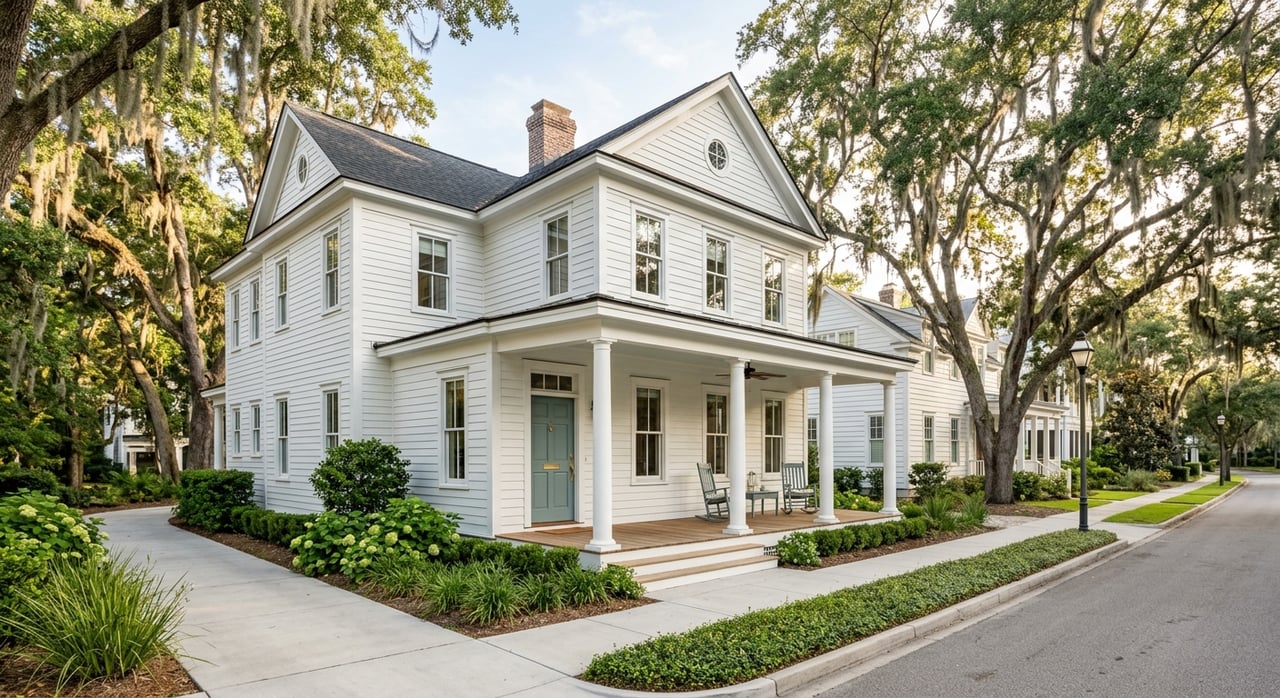
Wondering whether Daniel Island feels more like Charleston, more like the suburbs, or something in between? If you are relocating to the Lowcountry, that question matters because your daily routine, commute, and lifestyle can look very different from one area to the next. Daniel Island offers a distinctive middle ground, with a planned layout, strong outdoor amenities, and easy ties to the broader Charleston area. Let’s take a closer look.
Daniel Island at a glance
Daniel Island is a 4,000-acre island community within the City of Charleston, located in Berkeley County between the Cooper and Wando Rivers. The City of Charleston describes it as a waterfront setting with a pedestrian-friendly downtown, charming neighborhoods, and hundreds of acres of parks and green space. The island is also home to Credit One Stadium, which serves as a major entertainment anchor.
For many relocating buyers, that combination is what stands out first. You get a neighborhood environment that feels intentional and well organized, while still staying connected to the greater Charleston market. It is not trying to be downtown Charleston, and it is not a beach town either.
How Daniel Island is planned
One of the biggest differences you may notice on Daniel Island is how cohesive it feels. According to the city’s master plan, the Town Center was designed to function like a traditional town or village, with pedestrian-oriented streets, mixed uses, and homes and apartments of different sizes across a range of densities.
That planning approach shapes everyday life in a practical way. Instead of feeling like a spread-out suburban strip built around major roads, Daniel Island tends to feel like a connected neighborhood system. Its layout supports a more compact, organized rhythm for errands, recreation, and daily routines.
A town-center feel
The Town Center is a key part of how Daniel Island fits into greater Charleston. Community materials point to shops, restaurants, banks, medical offices, a supermarket, and a seasonal farmers’ market on the island. That means many day-to-day needs can be handled close to home.
For a relocator, this often translates into convenience without giving up a residential setting. You may still leave the island for work, dining, or appointments elsewhere in Charleston, but you are not starting from a place that lacks basics. That balance is a big part of Daniel Island’s appeal.
Built for walking, biking, and outdoor movement
The island’s trail system reinforces that connected feel. The POA says Daniel Island has more than 25 miles of trails running through marshes, maritime forest, neighborhoods, and downtown.
That matters because it affects how a place lives day to day. If you value being able to walk, bike, or simply spend time outside without making it a special outing, Daniel Island offers that in a very visible way. The infrastructure for an active routine is already built into the community.
What housing looks like on Daniel Island
If you are picturing one uniform type of home, Daniel Island is broader than that. Community overview materials describe a mix that includes single-family homes, condominiums, townhomes, and homesites with golf, marsh, park, deepwater, or other water-oriented views. The city’s planning framework also supports a range of housing types and densities.
That variety is helpful for relocation buyers because it opens up more than one path into the community. Your ideal fit may depend on budget, maintenance preferences, and how much space you want both inside and outside the home.
Buyers who may find a fit here
Daniel Island can work well for several kinds of buyers, including:
- Buyers who want a low-maintenance condo or townhome lifestyle
- Buyers looking for a detached home near parks and trails
- Buyers seeking marsh, waterfront, or golf-oriented views
- Buyers who want a newer planned community with on-island amenities
This range is one reason Daniel Island often comes up in relocation searches. It can serve different life stages without feeling scattered or random in its layout.
Lifestyle and amenities on the island
Outdoor access is one of Daniel Island’s defining strengths. The POA says the island includes hundreds of acres of parks and passive greenspaces, along with its 25-plus-mile trail network.
That outdoor framework is not just marketing language. It shapes how residents use the island, from casual walks and bike rides to playground time, waterfront views, and recreation close to home.
Parks and waterfront spaces
Smythe Park is the island’s largest park at 22 acres, with an 11-acre lake, kayak dock, and trails. The City of Charleston also lists Daniel Island Waterfront Park and Trails on the Wando River, with a playground, walking trails, and a fishing pier.
If outdoor living is part of your decision-making, these spaces can be a major advantage. They create room for fresh air and activity without needing to plan your life around a drive to find green space.
Recreation and everyday convenience
The Daniel Island Recreation Center hosts youth sports, fitness classes, and community programs according to the city. The city also lists LTP Daniel Island as a fee-based tennis facility with multiple lighted courts.
This adds another layer to the island’s appeal. For many buyers, especially those relocating from larger metro areas, Daniel Island offers a lifestyle that feels active and convenient without being overly hectic.
How Daniel Island connects to Charleston
When people relocate, they are rarely choosing a neighborhood in isolation. They are choosing how that neighborhood connects to work, entertainment, dining, and the broader region. Daniel Island performs well here because it offers both a self-contained feel and access to the rest of Charleston.
One especially notable option is the ferry connection. DI Ferry says it links Daniel Island and downtown Charleston with a scheduled trip of about 30 minutes, giving residents a water-based alternative to driving into the peninsula.
Easy access without a downtown setting
That distinction matters. You can enjoy access to downtown Charleston’s restaurants, culture, and historic core without living in the most urban part of the region. For some buyers, that is exactly the right tradeoff.
Daniel Island gives you breathing room, newer planning, and a more residential pace, while still keeping the peninsula within reach. That can feel especially appealing if you want connection without the intensity of living in the city center.
Where Daniel Island fits in greater Charleston
A helpful way to think about Daniel Island is to place it on Charleston’s lifestyle spectrum. It sits between several very different living experiences, and that middle position is part of what makes it so attractive.
Compared with downtown Charleston
Downtown Charleston is the region’s most urban, historic, and walkable option. The city’s Downtown Plan focuses on balancing business and residential uses in the core, and the area offers the densest historic urban fabric in the market.
Daniel Island is different in both age and feel. It is more planned, newer in character, and generally more spacious. If you want the strongest sense of historic city living, downtown may be a better fit. If you want a neighborhood that still offers convenience but with more room and more structured planning, Daniel Island may be more your speed.
Compared with Mount Pleasant
Mount Pleasant is often the suburban comparison point. Town planning materials describe much of it as predominantly suburban, with many conventional low-density single-family neighborhoods.
Daniel Island shares some suburban appeal, but it is more compact and internally amenitized in how daily life is arranged. In simple terms, it often feels more intentionally organized than a broad suburban landscape. That can be appealing if you want a neighborhood feel with a stronger built-in center.
Compared with Sullivan’s Island and Isle of Palms
Sullivan’s Island and Isle of Palms represent a more beach-oriented and resort-adjacent lifestyle. Those areas are tied more directly to barrier-island living and, in the case of Isle of Palms, to a summertime getaway identity and resort amenities.
Daniel Island offers water access and a coastal setting, but it is not the same kind of beach-town environment. If your goal is everyday beach proximity and a distinctly island-resort feel, those markets may align more closely. If you want a coastal lifestyle without centering your daily life around the beach, Daniel Island may be the better fit.
Who Daniel Island tends to suit best
Daniel Island is often a strong match for buyers who want a newer planned community, outdoor recreation, an established town center, and a neighborhood setting that connects easily to the greater Charleston area. It can be especially appealing if you value parks, trails, and a polished residential environment.
It may be less ideal if you want the most historic urban setting or a true beach-island lifestyle. The research also notes that traffic and development remain active resident concerns, which helps explain why the island can feel carefully managed rather than casually organic.
What to consider before you move
Before choosing Daniel Island, it helps to think beyond the photos and ask practical questions about your routine. Consider where you expect to spend most of your time, how important on-island amenities are to you, and whether you prefer a more planned setting or a more organically evolved neighborhood.
A few useful questions to ask yourself include:
- Do you want a newer community with a clear master-planned layout?
- How important are trails, parks, and recreation in your weekly routine?
- Do you want local conveniences close by without living downtown?
- Are you looking for a condo, townhome, or detached home?
- Would you rather have a coastal feel than a direct beach-town lifestyle?
Those answers usually make Daniel Island’s role in greater Charleston much clearer. For the right buyer, it offers a thoughtful middle ground that is hard to replicate elsewhere in the region.
If you are relocating and trying to compare Daniel Island with Mount Pleasant, downtown Charleston, or the barrier islands, having neighborhood-specific guidance can make the process much easier. Marisa Cromey can help you evaluate how each area fits your lifestyle, priorities, and long-term goals.
FAQs
What is Daniel Island like for someone relocating to Charleston?
- Daniel Island offers a planned residential setting with a town center, more than 25 miles of trails, hundreds of acres of parks and greenspace, and convenient access to the broader Charleston area.
How does Daniel Island compare with downtown Charleston?
- Daniel Island is less urban and less historic than downtown Charleston, with a newer, more planned feel and more emphasis on residential amenities, parks, and outdoor space.
How does Daniel Island compare with Mount Pleasant?
- Daniel Island shares some suburban appeal with Mount Pleasant, but it is generally more compact, more intentionally planned, and more centered around on-island amenities and a traditional town-center layout.
Is Daniel Island a beach town in the Charleston area?
- No. Daniel Island has water access and a coastal setting, but it does not offer the same beach-town lifestyle as Sullivan’s Island or Isle of Palms.
What types of homes can you find on Daniel Island?
- Buyers may find a mix of single-family homes, condominiums, townhomes, and properties with golf, marsh, park, waterfront, or deepwater-oriented views.
What amenities does Daniel Island offer residents?
- Daniel Island includes parks, trails, waterfront spaces, a recreation center, tennis facilities, and a town center with shops, restaurants, banks, medical offices, a supermarket, and a seasonal farmers’ market.